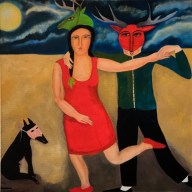
Dogs, Dinner Parties, and Echinacea

Before delving into Hippocrates’ command, which, of course, I think is great, and before you delve into Andy’s blog about un oeuf, I want to discuss Apollo.

The Greek god Apollo is associated with medicine and healing. So it’s not surprising that Apollo, the name of the dog in my current hands-down favorite novel, The Friend, by Sigrid Nunez, helps his new owner in her dealing with grief. I think we animal lovers would not even question how much the love and companionship of an animal (shall we omit cats from this blanket statement? At least OUR cats!) contribute to the quality of our daily lives and mental – and even physical – health (I’m not the dog-walker in the family, but I acknowledge that walking a dog is a healthy exercise).

Let a Dog be your Healer and your Healer (maybe a Blue Heeler?) be a Dog. Not as eloquent as the quote attributed to Hippocrates, but not bad.

If dogs are healers, I think flowers and plants and gardens are also healers in many ways. To be In the Garden (a song, which was sung with great enthusiasm by the musical side of my family when gathered around the piano/organ) is to find solace in nature – assuming your garden is not overrun with gophers, moles, voles, fruit flies, and hornworms. According to this relevant article on gardening as therapy, Colorado State University offers a degree with a focus on Horticultural Therapy. Kind of a cool idea. Maybe I’ll suggest it to our college-bound grandson.
Echinaceas are a favorite perennial in our garden – and echinacea is also my go-to if I think I’ve been exposed to someone who has a cold or the flu. The research supporting echinacea’s medicinal properties is still TBD, but I’m a believer….but only if you take it before your fledgling-symptoms have turned into a full-fledged sickness.


Now about food (I occasionally forget that this is supposed to be a food blog): Ceres may have been Roman, not Greek, but she was a goddess of “agriculture, grain crops, fertility and motherly relationships” and a Northern California group has named their organization after her. And that organization is preparing and delivering food to cancer patients, hoping to show that good food can, indeed, work as medicine.
A NYTimes article elaborates even more on new research being done into food as medicine. Not only have UCSF and Stanford joined up to explore the link, but the Times reports that the U.S. House of Representatives Hunger Caucus recently launched a Food Is Medicine Working Group to look at how “research into medically tailored meals might inform national policy” (with the goal being to keep medical costs down!). Will wonders never cease.
But good food can contribute to our mental health, as well as our physical health. We wholeheartedly agreed when our friend Lynne recently suggested that getting friends together around a dinner table may be a great way to help our psyches – which may need lots of help given this day and age (perhaps with the caveat that hugely-controversial subjects are best left for other times and places).

Six years ago the NYTimes posted an essay bemoaning the death of the dinner party, “Guess Who Isn’t Coming to Dinner,” the gist of it being that increasing food sensitivities, hand-held devices, and inability to converse are contributing to the demise. A relevant quote from the article states that dinner parties had “a sense of fun and community and gathering people together for good simple food.”
We think it would be great if the old-fashioned dinner parties were reactivated. Call them a “Pot” luck? Mmmmm. How about a “Dining In?” Andy has memories of Dining Ins in Vietnam… defined as dinner and drinks – and lots of toasts – for officers in a military company, intended to foster camaraderie. That’s also what the NYTimes new food writer, Alison Roman, calls her “easy, impressive dinner” ideas column. Our Dining Ins can be defined as Easy, Impressive Dinners Intended to Foster Camaraderie.

When we were in the LSU Newcomers’ Dinner Club years ago, a hostess would put together a menu with recipes and then each person would make and bring their assigned dish. That was a nice touch because it kept the dinner from being too mish-mash – which could happen if everyone just brought something they wanted to cook.
Since Apollo is a Greek god, why don’t you start with a Greek-themed dinner party; I’ve made sure that every recipe can be made a day ahead of time so no one has a last minute rush and everyone arrives relaxed and ready for stimulating conversation and delicious food and wine (or beer or milk, if you insist). …


